Kayan Valley

The Eagle's Nest

Menu
  • Home
  • About Us
  • Sayed Kayan
  • Eagle of Kayan
  • Blog
  • Videos
  • Contact Us
  • Gift Shop
0
Menu
0

Author: Kayan Valley

History and Global Presence of the Ismaili Muslim Community

Posted on April 9, 2024September 1, 2024 by Kayan Valley

The Ismaili Muslim community, known for its deep-rooted historical and cultural presence, is a prominent sect within Shia Islam. After the death of the Prophet Muhammad, the Muslim community split into two main groups: Shia and Sunni. The Shia Muslims believe in the divine right of the Prophet’s family to succeed him, specifically recognizing Ali, the Prophet’s cousin and son-in-law, as his appointed successor. On the other hand, Sunni Muslims support the formation of the caliphate by the Prophet’s companions, known as the ‘Ashabs and Friends of the Prophet.’ Over time, these groups further subdivided, with the Ismailis representing a significant branch within the Shia community.

The origin of the Ismaili community can be traced back to a critical moment in Islamic history following the death of Jafar Sadiq in 765 AD. Jafar Sadiq was the sixth Imam in the Shia sector, and his death led to a major schism among his followers over the issue of succession. A faction of his followers believed that Jafar had appointed his eldest son, Ismail, as his successor. This group eventually became known as the Ismailis. Meanwhile, the majority of Shia Muslims gave their allegiance to Musa Kazim, Ismail’s younger brother, leading to the formation of what is now the Twelver Shia community. The Ismaili community also faced internal divisions over time, particularly concerning the position of Imam Hassan, the son of Ali. While the Twelver Shia recognized Hassan as the second Imam, followed by his brother Hussein, the Ismailis consider Hussein as the second Imam, skipping over Hassan.

The period following Ismail’s appointment as Imam was marked by significant opposition, both from within the Shia community and from the ruling Abbasid Caliphate, which sought to suppress the Shia sects. During this time, Ismail and his successors were forced to live in secrecy, communicating with their followers through missionaries known as da’is. This period of hidden leadership, often referred to as the “first absence,” continued until the establishment of the Fatimid Caliphate in 909 AD, a major turning point in Ismaili history.

The Fatimid Caliphate, which lasted from 909 to 1100 AD, marked the height of Ismaili power and influence. Established by the 11th Imam, Mohammad Mehdi, in North Africa (modern-day Tunisia), the Fatimid Caliphate rapidly expanded its territories to include Egypt, Palestine, Syria, and parts of the Arabian Peninsula, including Medina and Mecca. The Fatimids are renowned for their contributions to science, architecture, and the arts, as well as for promoting economic justice and religious tolerance within their realm. Cairo, founded by the Fatimid Caliph Al-Muizz, became the capital of their empire and a major center of learning and culture. However, the Fatimid Caliphate eventually declined, primarily due to internal disputes over the succession of the Imamat, leading to its eventual collapse.

The next significant period in Ismaili history is associated with the Alamut fortress and Hassan Sabbah. In 1094 AD, the Alamut period began, marking the emergence of the Nizari Ismaili sect. Hassan Sabbah, a key figure in this era, established the Alamut fortress in Persia as the headquarters of the Nizari Ismaili state. Hassan Sabbah’s campaigns against the Seljuk Turks and the Caliphate of Baghdad are well-documented and remain a crucial part of both Ismaili and Iranian history. Despite constant threats from the powerful Seljuk Empire, the Ismaili movement under Hassan Sabbah’s leadership managed to establish a network of strongholds and fortresses across the region. This period of Ismaili rule, which lasted for approximately 170 years, came to an end with the Mongol invasions in the 13th century, leading to the destruction of Alamut and its associated cultural and scientific institutions.

The Safavid dynasty, which rose to power in the 16th century, posed another significant challenge to the Ismaili community. Under the Safavids, the Ismailis faced persecution and were forced to practice Taqiyah, a form of religious dissimulation, to protect their identity. The Safavid rulers sought to eliminate all Shia sects that did not conform to their interpretation of Islam, leading to the martyrdom of many Ismaili leaders, including Imam Murad Mirza. Despite these challenges, the Ismaili community managed to survive, particularly in the Indian subcontinent, where many Ismailis converted to Islam and became known as Khoja Ismailis.

The rise of Nader Shah Afshar in the 18th century brought a period of relative freedom for the Ismailis. The Imamat regained recognition and even cooperated with Nader Shah’s government in some instances. This period also saw the emergence of the Aga Khan title, first bestowed upon Imam Hassan Ali Shah by the Qajar dynasty. The Aga Khan eventually migrated to India, establishing Bombay as the new seat of the Ismaili Imamat. From there, the Aga Khans played a significant role in the politics and social development of the region. Aga Khan III, in particular, was an influential figure in both Indian and global politics, founding the All-India Muslim League and serving as its chairman for six years. His efforts in advocating for the rights of Muslims in India and his role as the first chairman of the League of Nations in 1937 are notable highlights of his leadership.

The current Imam, Prince Karim Aga Khan, represents the 49th hereditary leader of the Ismaili community. Under his leadership, the Ismaili Imamat has become more actively engaged in global development, promoting peace, pluralism, and cultural preservation. The Imamat now has diplomatic relations with over 35 countries and operates numerous development projects worldwide, particularly through the Aga Khan Development Network (AKDN). The Ismailis today are a diverse global community, with significant populations in South and Central Asia, East Africa, Europe, and North America, totaling an estimated 15 to 20 million people.

In Asia, Afghanistan remains a significant center of Ismaili history, with a presence dating back to the time of Nasir Khusraw, a renowned Ismaili philosopher and missionary. The Ismailis in Afghanistan, primarily located in provinces like Badakhshan, Baghlan, Bamyan, Wardak, Balkh, Parwan, Samangan, Kunduz, Takhar and Kabul, have historically played active roles in the country’s politics. Similarly, the Ismailis of Iran have a rich history of both persecution and resilience, particularly during the Seljuk, Safavid, and Qajar periods. The Pakistani Ismaili community, with its deep involvement in the establishment of Pakistan and its economic and educational development, also stands out. The community’s literacy rates in regions like Gilgit Baltistan are significantly higher than the national average, reflecting the success of Ismaili educational initiatives.

Ismaili communities are also found in Bangladesh, Tajikistan, and other parts of Central Asia, where they have maintained strong cultural and religious ties despite historical challenges. In East Africa, the Ismailis were among the first Muslim immigrants, establishing themselves in countries like Tanzania, Kenya, and Uganda. The community’s contributions to education, healthcare, and media in the region are well recognized, with institutions like the Nation Media Group in Kenya being prominent examples. The Ismaili community in Uganda faced significant challenges during the reign of Idi Amin, but many were able to migrate to Europe and North America, thanks to international support orchestrated by the Aga Khan.

In Europe, the Ismaili community has a strong presence, particularly in the United Kingdom, France, and Portugal. The establishment of the Diwan e Imamat in Lisbon in 2018 marked a significant milestone in the contemporary history of the Ismaili community, as it was the first time a Christian country had formally recognized the seat of the Ismaili Imamat. The Aga Khan Development Network (AKDN) operates several important institutions across Europe, including in Switzerland and Germany.

The Americas, particularly the United States and Canada, host large Ismaili communities. In Canada, the Imamat has a strategic partnership, with significant cultural and educational institutions, including the Aga Khan Museum and the Global Center for Pluralism, being established in the country. The Ismailis in the United States are also well-organized, with numerous Jamatkhanas across major cities.

In conclusion, the Ismaili community represents a unique and influential branch of Shia Islam with a rich history of resilience, cultural preservation, and global engagement. Under the leadership of the Aga Khan, the community continues to play a significant role in promoting peace, development, and pluralism worldwide, embodying the core values of their faith. The Ismailis’ commitment to education, social justice, and cultural preservation ensures their continued relevance and influence in the contemporary world.

Majesty and Might: The Story of King Zahir Shah in Kayan Valley

Posted on March 23, 2024August 31, 2024 by Kayan Valley

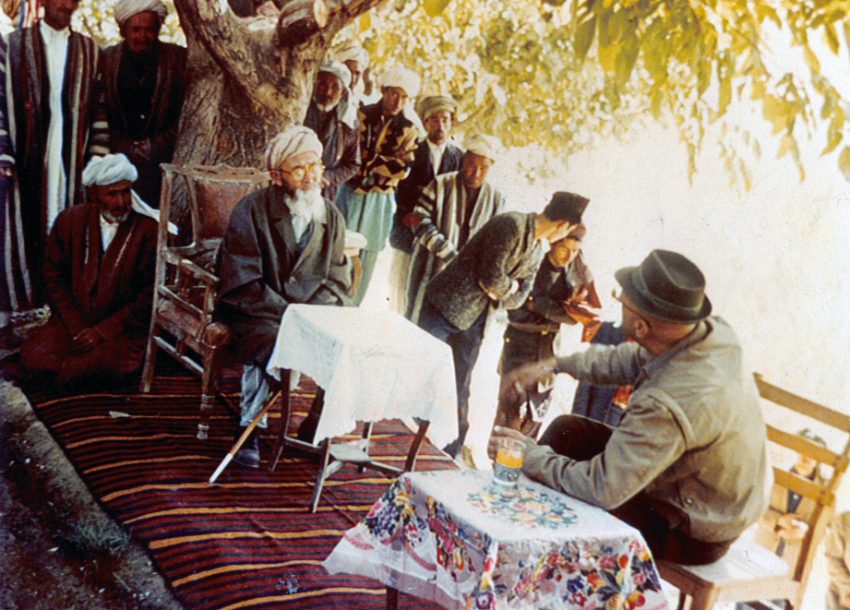
It was a picturesque spring day in 1964 in the valleys of Ashraf and Kayan, where tulips bloomed in abundance, painting the landscape with vibrant colors. The air buzzed with excitement as word spread that His Majesty, King Mohammad Zahir Shah, along with his family, was to visit Kayan Valley. The invitation had come from Sayed Nadir Shah Kayani, known affectionately as “Sayed Kayan.”

The residents of Kayan Valley were filled with anticipation. As the day of the royal visit approached, Sayed Nadir Shah mobilized a large group of men and young people from the Ismaili villages. They were to don their finest clothes and greet the king with the utmost respect, ensuring that his arrival in Kayan was nothing short of spectacular.

On the day of the visit, more than ten thousand people lined the roads leading into the valley, forming a human corridor from the Shikari Valley to Kayan. With the queen accompanying the king, countless women joined the throngs, eager to welcome the royal couple with flowers and applause. For nearly five kilometers, the roads were alive with the sounds of celebration.

As the royal motorcade slowly made its way to a place called “Bandak Valley,” just half a kilometer from Sayed Nadir Shah’s residence, King Zahir Shah was struck by an extraordinary sight. The road ahead had been meticulously covered with the finest carpets, creating a plush path for the royal vehicles. For 500 meters, the luxurious carpets symbolized the deep respect and devotion the people of Kayan felt for their king.

The king and his family were visibly moved by this gesture. It was clear that the people of Kayan Valley held their monarch in the highest regard, seeing him as the “Shadow of God.” The royal car was showered with colorful flowers at various points along the route, and in a traditional act of reverence, several cattle were sacrificed in honor of the king.

The final stretch of the journey was particularly memorable, as the royal motorcade passed over the lavishly carpeted road, where a grand display of flowers awaited them. The king was then escorted to a guesthouse named Gulkhana, where a royal feast had been prepared in his honor. The kitchen of Sayed Nadir Shah Kayani was abuzz with activity as various dishes were served, each more exquisite than the last.

That evening, the women of Kayan Valley gathered around the queen, attending to her needs with sincere devotion. King Zahir Shah, reclining on a cushion, was struck by the order and grandeur of Sayed Nadir Shah Kayani’s court. The experience left a lasting impression on him.

The following day, when it was time for the king to depart, he was once again honored with the same respect and ceremony. Flowers continued to be showered on the royal car for nearly twenty kilometers as men and women lined both sides of the road, bidding farewell to the king. A few thoroughbred horses, gifts from Sayed Nadir Shah, were also led behind the royal car, much to the delight of onlookers.

Inside the car, the king’s son, Prince Ahmad Shah, quietly expressed his amazement at the grandeur and order of the court, noting that it was unlike anything he had seen before. However, the king’s thoughts began to shift. What had initially seemed like a warm display of hospitality now appeared to him as something more—a demonstration of power and status.

Upon returning to Kabul, the king’s security team reported the visit to the then-Prime Minister, Mohammad Hashim Maiwandwal. The Prime Minister echoed the king’s thoughts, suggesting that Sayed Nadir Shah’s invitation was not merely a gesture of hospitality but a calculated display of power.

The king’s advisors were concerned. They argued that there could not be two centers of power in one country—one in Kabul and another in Kayan Valley. They recommended a thorough investigation into the political and economic activities of Sayed Nadir Shah Kayani’s family. The king agreed, and the matter was placed within the legal framework of the time.

From 1967 to 1969, the government intensified scrutiny on the people of Baghlan Province, particularly the Ismaili community. Fabricated documents and baseless accusations were used to exert pressure on Sayed Nadir Shah Kayani and his sons. Sayed Mansoor Naderi, Sayed Rawnaq Naderi, Sayed Gohar Naderi, and Sayed Abdul Qadir Naderi, along with several other respected Ismaili leaders, were imprisoned in Baghlan, Doshi, Jabal Saraj, and Kabul. It was only during the tenure of Prime Minister Noor Ahmad Etemadi that the courts, led by Judge Mr. Forqani, declared the cases against them to be fraudulent and without merit, leading to their release.

What began as an act of sincere hospitality ended in a saga of ungrateful conspiracy, a stark reminder of the complex interplay between power and loyalty.

Source: “Kayanian and Ismailis of Afghanistan” by Sayed Ibrahim Bamyani, published in Kabul, Afghanistan.

The Kayan Drug Addiction Treatment Center During Afghanistan’s Civil War

Posted on March 19, 2024August 31, 2024 by Kayan Valley

In the heart of Afghanistan’s civil war during the 1990s, a unique initiative emerged in the remote valley of Kayan—a drug addiction treatment center that offered free medical services to those struggling with addiction. This center, established by Sayed Mansur Naderi, an influential Ismaili leader, became a lifeline for many during a time when access to healthcare was severely limited due to the ongoing conflict. The facility was fully funded through Ismaili religious resources, underscoring the community’s commitment to providing humanitarian aid in a time of national crisis.

The Kayan Drug Addiction Treatment Center was conceived in response to the rising problem of drug addiction, particularly in northern Afghanistan. Sayed Mansur Naderi recognized the devastating impact that opium and drug addiction were having on individuals and communities, and he sought to address this issue by establishing a dedicated medical facility in Kayan Valley. The center was strategically located in this remote area to serve a population that had little to no access to medical care, particularly those suffering from addiction.

The center operated during a period of intense civil unrest in Afghanistan, which made the provision of consistent healthcare services a formidable challenge. Despite these difficulties, the Kayan center quickly became an essential resource for the region. Journalistic accounts from 1992 revealed that the majority of patients treated at the center were from Badakhshan province, a region known for its mountainous terrain and isolated communities. These patients came from districts such as Ishkashim, Shighnan, Zebak, and Darwaz, areas where drug addiction had taken a particularly severe toll.

Over the years, the Kayan center treated more than 3,200 individuals, offering comprehensive medical care and rehabilitation services. This figure highlights the significant impact the center had in addressing the drug addiction crisis in the region. The services provided were not limited to those who could physically reach the center; recognizing the challenges posed by the difficult terrain and the lack of infrastructure, Sayed Mansur Naderi initiated mobile medical teams. These teams, consisting of doctors and medical assistants, were dispatched to the most inaccessible districts to set up temporary medical camps. These camps offered on-site treatment and care to individuals who otherwise would not have had access to medical services. The mobile units were particularly effective in reaching out to remote communities, and their efforts were warmly welcomed by the local populations.

Short documentary report on the operation of the hospital with Persian narration by Dodallah Hassan

The operation of the Kayan center and its mobile units was entirely funded by Ismaili religious funds, which covered all expenses related to medical treatment, staff salaries, and the logistics of running mobile clinics. This financial support ensured that all services were provided free of charge, making the center a rare and invaluable resource in a country where healthcare was often inaccessible, especially during the war.

The center’s impact extended beyond the immediate medical care it provided. It played a crucial role in fostering community solidarity and support during a time of national division and hardship. The center became a symbol of hope and recovery for those affected by addiction, and it demonstrated the potential of community-driven initiatives to address critical public health issues even in the most challenging circumstances.

Sayed Mansur Naderi’s efforts to establish and sustain the Kayan Drug Addiction Treatment Center were a clear reflection of his broader commitment to improving the welfare of all Afghans, regardless of religious or ethnic background. The center’s operation during such a turbulent period in Afghanistan’s history highlights the importance of local and community-based efforts in providing essential services when state resources are insufficient or unavailable. The center’s ability to operate effectively, despite the ongoing conflict, underscores the resilience and resourcefulness of the Ismaili community in Afghanistan.

The Kayan center’s legacy is one of compassion and practical action in the face of adversity. It stands as a testament to the power of community initiative and the critical role that religious and cultural organizations can play in addressing public health crises. The treatment center not only provided immediate relief to those suffering from addiction but also laid the groundwork for a broader understanding of the importance of accessible healthcare in post-conflict recovery and development.

Today, the story of the Kayan Drug Addiction Treatment Center serves as an important chapter in the history of Afghanistan’s civil war. It highlights how targeted, community-funded initiatives can make a profound difference in the lives of individuals and communities, even in the most difficult circumstances. The center remains a powerful example of how healthcare, combined with a commitment to social welfare, can bring about positive change and offer hope to those in need.

The Ismaili Flag: A Symbol of Heritage and Sacrifice

Posted on March 19, 2024August 31, 2024 by Kayan Valley

The Ismaili flag, recognized by its green background and distinctive red diagonal stripe, is a significant emblem for the Ismaili community. This flag is not merely a piece of cloth but a representation of the community’s historical roots, cultural identity, and values. The design and colors of the Ismaili flag are deeply connected to Islamic history and the traditions of the Ismaili community, reflecting a legacy of peace, sacrifice, and leadership. This article explores the origins, symbolism, and historical development of the Ismaili flag, highlighting its role in the community’s identity.

Origins and Early History

Flags have been important in Islamic tradition since the time of the Prophet Muhammad. The earliest flags, such as those used in ancient Egypt, primarily served religious purposes. Over time, flags evolved into military standards, becoming symbols of authority and rallying points in battles.

In the early Islamic period, each tribe had its own banner, often carried by the bravest warrior. The Prophet Muhammad’s banner was green, a color that became strongly associated with Islam and the Prophet’s descendants. This green banner was used to rally Muslims during battles, and over time, it became a symbol of the Islamic state and the emerging Muslim community.

The Fatimid Era: Establishing the Green Flag

The green color of the Ismaili flag has its roots in the Fatimid Caliphate (909-1171), a Shia Islamic dynasty that was instrumental in spreading Ismailism. The Fatimids, who ruled parts of North Africa and the Middle East, adopted green as the official color of their dynasty. In Islamic culture, green symbolizes life, nature, and paradise. The Fatimid green flag became a widely recognized symbol of their rule.

During the Fatimid period, the Ismaili flag was formalized as a symbol of the Ismaili community. The Fatimids established a department for creating and maintaining flags, known as the “Khazinat al-Bunud” (Store of Banners). These flags were used in battles, processions, and religious ceremonies, often adorned with Quranic verses and other religious symbols.

The Alamut Period and the Introduction of Red

The Ismaili flag saw further development during the Alamut period (1090-1256) under the leadership of Hasan bin Sabbah. The Alamut fortress in Iran became the center of the Nizari Ismaili state. Hasan bin Sabbah, who took control of Alamut in 1090, is reported to have hoisted the green Ismaili flag on the fortress, symbolizing the establishment of Ismaili rule in the region.

During the Alamut period, the red color was introduced to the Ismaili flag. This addition is associated with the commemoration of the martyrdom of Imam Hussain at the Battle of Karbala in 680 CE, an event of great significance in Shia Islam. The red diagonal stripe on the Ismaili flag symbolizes the blood of Imam Hussain, representing sacrifice and the pursuit of justice.

On August 8, 1164, Imam Hasan Ala Zikrihi’s Salam proclaimed the “Qiyamat-i Qubra” (the Great Resurrection) at Alamut. This event was marked by the hoisting of four large banners in different colors—white, red, yellow, and green—at the corners of the pulpit, further emphasizing the symbolic importance of these colors in Ismaili tradition.

The Modern Ismaili Flag

The modern Ismaili flag, as recognized today, was officially established in the early 20th century. On June 19, 1927, during the Eid-i-Ghadir celebration at the Thana Jamatkhana in India, the Ismaili flag was hoisted for the first time. The design featured a green background with a red diagonal stripe running from the top-left corner to the bottom-right corner. This design was approved by Imam Sultan Muhammad Shah Aga Khan III, the 48th Imam of the Ismaili community.

The Ismaili flag quickly became central to Ismaili ceremonies, symbolizing the community’s spiritual and temporal leadership. It is used during significant occasions, such as the visits of the Imam and other important community events. Over time, the Ismaili flag became affectionately known as “My Flag,” a term introduced by Imam Sultan Muhammad Shah, further solidifying its importance within the community.

Symbolism of the Green and Red Colors

The green color of the Ismaili flag symbolizes peace, prosperity, and spiritual leadership, closely connected to the Prophet Muhammad’s green banner. The red stripe represents sacrifice, particularly the martyrdom of Imam Hussain at Karbala. Together, these colors reflect the values of peace and sacrifice that have been central to the Ismaili community throughout its history.

Imam Sultan Muhammad Shah Aga Khan III explained the symbolism of the flag’s colors in a letter dated October 16, 1954. He stated that green represented the spiritual authority (Peer) of Imam Hasan, while red symbolized the martyrdom (Shah) of Imam Hussain. This duality reflects the Ismaili community’s commitment to both spiritual enlightenment and the pursuit of justice.

The Ismaili Flag in Contemporary Times

Today, the Ismaili flag continues to be a vital symbol of the community’s identity and traditions. It is flown on Jamatkhanas (community centers) and other significant Ismaili institutions, particularly during festive occasions, the visits of the Imam, and when the Imam sends a “farman” (guidance) to the community. The flag is treated with respect, typically hoisted at sunrise and taken down at sunset.

The Ismaili Constitution, ordained by Mawlana Hazar Imam Aga Khan IV on December 13, 1986, in Geneva, includes specific provisions regarding the use of the Ismaili flag. The Constitution emphasizes that the flag and its colors must not be misused or altered, ensuring that it remains a respected symbol of the community’s heritage and values.

Conclusion

The Ismaili flag, with its green and red colors, is a significant symbol of the Ismaili community’s heritage and values. From its origins in the Fatimid Caliphate to its modern-day role, the flag represents the Ismaili community’s journey under the guidance of the Imamate. As the Ismaili community continues to evolve, the flag remains a constant reminder of their rich history and the principles that continue to guide them.

Sources:

  1. Levy, Reuben. “The Social Structure of Islam.” Cambridge, 1962.
  2. “American Educator,” New York, 1973.
  3. “The New Encyclopaedia Britannica,” 15th edition, vol. 4.
  4. Poole, Stanley Lane. “History of Egypt.” London, 1914.
  5. Al-Azizi, Jawdhar. “Sirat al-Ustadh Jawdhar.” 974.
  6. Abd al-Wahhab, Hasan Husni. “Tarikh al-Adab al-Tunisi.” Tunis, 1968.
  7. Beshir, B.J. “Fatimid Military Organisation.” Der Islam, 1978.
  8. Waqidi. “Kitab al-Maghazi.” London, 1966.
  9. Hammad, Ibn. “Akhbar al-Muluk Bani Ubayd wa Siyaratihim.” Paris, 1927.
  10. Khaldun, Ibn. “Muqaddimah.” 1st vol.

The Art of Faith: Ismailis Lead the Creation of the Largest Quran in the World

Posted on March 17, 2024August 31, 2024 by Kayan Valley

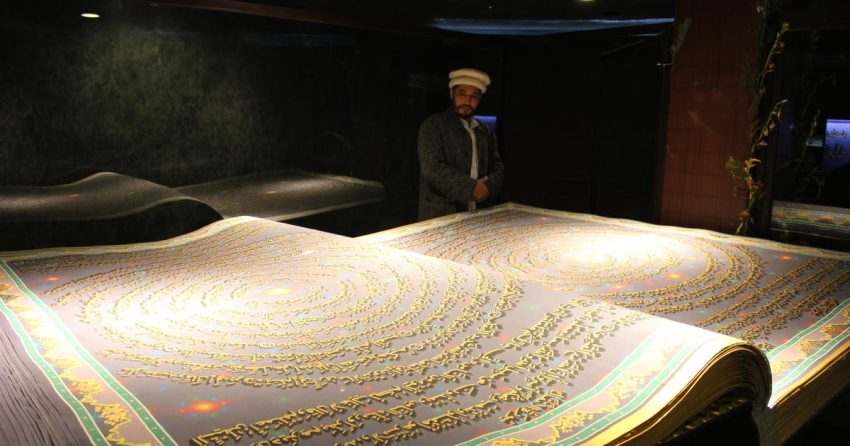
In a remarkable testament to Afghanistan’s rich cultural and Islamic heritage, the world’s largest handmade Quran was unveiled in Kabul in 2012. This extraordinary piece of art was crafted by Afghan calligrapher Mohammed Sabir Khedri Hussani and his team of nine student apprentices over a period of five years. The project was not just an artistic endeavor but also a profound expression of devotion and cultural pride, spearheaded by the Afghan Ismaili leader, Sayed Mansur Naderi.

Overview

The monumental Quran stands over seven feet tall and five feet wide, weighing an impressive 1,102 pounds. It consists of 218 pages, each meticulously inscribed with Quranic verses using the traditional art of Islamic calligraphy. The pages are adorned with intricate designs and decorations, with each of the 30 parts of the Quran featuring a unique design. The entire manuscript is bound in an embossed leather cover crafted from the hides of 21 goats, further adding to its grandeur and significance.

Historical Significance

The creation of this magnificent Quran was initiated in September 2004 and completed in September 2009. However, it was not until January 2012 that the world had the privilege of witnessing its unveiling. The project was deeply rooted in the vision of preserving and promoting Afghanistan’s Islamic scholarship and cultural heritage. Sponsored by Sayed Mansur Naderi, a prominent religious figure and leader of the Shia Ismaili community in Afghanistan, the project symbolizes a blend of faith, art, and national pride.

Sayed Mansur Naderi’s commitment to this project was not just about producing a grand manuscript but also about creating a lasting legacy for future generations. His daughter, Farkhunda Zahra Naderi, played a significant role in the project, particularly in the renovation of the library that now houses this Quran. The manuscript is proudly displayed in the Hakim Nasir Khusraw Balkhi Cultural Center, a facility dedicated to the preservation of Afghan culture and history.

The Inauguration Ceremony

The inauguration ceremony in Kabul was a grand affair, attended by high-level Afghan government officials, religious leaders, and a large public audience. The event also marked the opening of the Hakim Nasir Khusraw Balkhi Cultural Center and an art exhibition showcasing the rich history of Khurasan.

During the ceremony, Sayed Mansur Naderi expressed his deep satisfaction with the completion of the Quran, describing it as a significant achievement not only for Afghanistan but for Muslims worldwide. He emphasized the importance of this work as a contribution to the cultural and religious heritage of Afghanistan.

Mohammad Karim Khalili, the second deputy to then-President Hamid Karzai, conveyed his congratulations, noting that the creation of the world’s largest Quran was a monumental accomplishment for the Afghan nation. Similarly, Afghan Senate House speaker Fazal Hadi Muslimyar presented appreciation letters to Sayed Mansur Naderi, Mohammed Sabir Khedri, and the nine students who contributed to the calligraphy.

The ceremony was also graced by the presence of Hujat ul Islam Waez Zada Besudi, who lauded the initiative as a vital service to the history and culture of Afghanistan. Nematullah Shahrani, an adviser from the Afghan presidential palace and a respected religious cleric, further praised Sayed Mansur Naderi’s efforts in advancing Afghanistan’s cultural and historical services.

Cultural Impact

The unveiling of the world’s largest handmade Quran stands as a testament to the enduring spirit of the Afghan people and their dedication to preserving their religious and cultural heritage. It is a source of immense pride for the Ismaili community and for all Afghans, showcasing their ability to create something truly extraordinary in the face of adversity.

The Quran’s placement in the Hakim Nasir Khusraw Balkhi Cultural Center is part of a broader initiative to safeguard Afghan culture, ensuring that the legacy of this significant work continues to inspire future generations. Through this project, the Ismaili community, under the leadership of Sayed Mansur Naderi, has left an indelible mark on the cultural and religious landscape of Afghanistan, reaffirming their role as key contributors to the preservation of Islamic art and heritage.

The creation of the world’s largest handmade Quran is not merely an artistic achievement; it is a symbol of resilience, faith, and cultural pride that will resonate through history as a shining example of Afghanistan’s rich and diverse heritage.

  • Previous
  • 1
  • 2
  • 3
  • Next
Bring the Beauty of the Hindukosh into Your Home
Get a stunning framed canvas of the Hindukosh Mountain view from Kayan Valley – perfect for your wall.

Recent Posts

  • Ismaili Imamat Pledges €100 Million to Syria’s Recovery at European Commission ConferenceMarch 18, 2025
  • Aga Khan V Ascends as the 50th Hereditary Imam of Ismaili MuslimsFebruary 13, 2025
  • Hakim Nasir Khusraw: Poet, Philosopher, and Ismaili VisionaryOctober 11, 2024
  • How the Ismailis of Tajikistan Reconnected with the Imamat DivanAugust 5, 2024
  • Kayan Valley’s Healthcare Initiatives for the Ismailis of Badakhshan, AfghanistanAugust 2, 2024

©2024 Kayan Valley

  • Home
  • Privacy Policy
  • Terms of Use
  • Return & Refund Policy