Kayan Valley

The Eagle's Nest

Menu
  • Home
  • About Us
  • Sayed Kayan
  • Eagle of Kayan
  • Blog
  • Videos
  • Contact Us
  • Gift Shop
0
Menu
0

Tag: Ismaili heritage

The Ismaili Flag: A Symbol of Heritage and Sacrifice

Posted on March 19, 2024August 31, 2024 by Kayan Valley

The Ismaili flag, recognized by its green background and distinctive red diagonal stripe, is a significant emblem for the Ismaili community. This flag is not merely a piece of cloth but a representation of the community’s historical roots, cultural identity, and values. The design and colors of the Ismaili flag are deeply connected to Islamic history and the traditions of the Ismaili community, reflecting a legacy of peace, sacrifice, and leadership. This article explores the origins, symbolism, and historical development of the Ismaili flag, highlighting its role in the community’s identity.

Origins and Early History

Flags have been important in Islamic tradition since the time of the Prophet Muhammad. The earliest flags, such as those used in ancient Egypt, primarily served religious purposes. Over time, flags evolved into military standards, becoming symbols of authority and rallying points in battles.

In the early Islamic period, each tribe had its own banner, often carried by the bravest warrior. The Prophet Muhammad’s banner was green, a color that became strongly associated with Islam and the Prophet’s descendants. This green banner was used to rally Muslims during battles, and over time, it became a symbol of the Islamic state and the emerging Muslim community.

The Fatimid Era: Establishing the Green Flag

The green color of the Ismaili flag has its roots in the Fatimid Caliphate (909-1171), a Shia Islamic dynasty that was instrumental in spreading Ismailism. The Fatimids, who ruled parts of North Africa and the Middle East, adopted green as the official color of their dynasty. In Islamic culture, green symbolizes life, nature, and paradise. The Fatimid green flag became a widely recognized symbol of their rule.

During the Fatimid period, the Ismaili flag was formalized as a symbol of the Ismaili community. The Fatimids established a department for creating and maintaining flags, known as the “Khazinat al-Bunud” (Store of Banners). These flags were used in battles, processions, and religious ceremonies, often adorned with Quranic verses and other religious symbols.

The Alamut Period and the Introduction of Red

The Ismaili flag saw further development during the Alamut period (1090-1256) under the leadership of Hasan bin Sabbah. The Alamut fortress in Iran became the center of the Nizari Ismaili state. Hasan bin Sabbah, who took control of Alamut in 1090, is reported to have hoisted the green Ismaili flag on the fortress, symbolizing the establishment of Ismaili rule in the region.

During the Alamut period, the red color was introduced to the Ismaili flag. This addition is associated with the commemoration of the martyrdom of Imam Hussain at the Battle of Karbala in 680 CE, an event of great significance in Shia Islam. The red diagonal stripe on the Ismaili flag symbolizes the blood of Imam Hussain, representing sacrifice and the pursuit of justice.

On August 8, 1164, Imam Hasan Ala Zikrihi’s Salam proclaimed the “Qiyamat-i Qubra” (the Great Resurrection) at Alamut. This event was marked by the hoisting of four large banners in different colors—white, red, yellow, and green—at the corners of the pulpit, further emphasizing the symbolic importance of these colors in Ismaili tradition.

The Modern Ismaili Flag

The modern Ismaili flag, as recognized today, was officially established in the early 20th century. On June 19, 1927, during the Eid-i-Ghadir celebration at the Thana Jamatkhana in India, the Ismaili flag was hoisted for the first time. The design featured a green background with a red diagonal stripe running from the top-left corner to the bottom-right corner. This design was approved by Imam Sultan Muhammad Shah Aga Khan III, the 48th Imam of the Ismaili community.

The Ismaili flag quickly became central to Ismaili ceremonies, symbolizing the community’s spiritual and temporal leadership. It is used during significant occasions, such as the visits of the Imam and other important community events. Over time, the Ismaili flag became affectionately known as “My Flag,” a term introduced by Imam Sultan Muhammad Shah, further solidifying its importance within the community.

Symbolism of the Green and Red Colors

The green color of the Ismaili flag symbolizes peace, prosperity, and spiritual leadership, closely connected to the Prophet Muhammad’s green banner. The red stripe represents sacrifice, particularly the martyrdom of Imam Hussain at Karbala. Together, these colors reflect the values of peace and sacrifice that have been central to the Ismaili community throughout its history.

Imam Sultan Muhammad Shah Aga Khan III explained the symbolism of the flag’s colors in a letter dated October 16, 1954. He stated that green represented the spiritual authority (Peer) of Imam Hasan, while red symbolized the martyrdom (Shah) of Imam Hussain. This duality reflects the Ismaili community’s commitment to both spiritual enlightenment and the pursuit of justice.

The Ismaili Flag in Contemporary Times

Today, the Ismaili flag continues to be a vital symbol of the community’s identity and traditions. It is flown on Jamatkhanas (community centers) and other significant Ismaili institutions, particularly during festive occasions, the visits of the Imam, and when the Imam sends a “farman” (guidance) to the community. The flag is treated with respect, typically hoisted at sunrise and taken down at sunset.

The Ismaili Constitution, ordained by Mawlana Hazar Imam Aga Khan IV on December 13, 1986, in Geneva, includes specific provisions regarding the use of the Ismaili flag. The Constitution emphasizes that the flag and its colors must not be misused or altered, ensuring that it remains a respected symbol of the community’s heritage and values.

Conclusion

The Ismaili flag, with its green and red colors, is a significant symbol of the Ismaili community’s heritage and values. From its origins in the Fatimid Caliphate to its modern-day role, the flag represents the Ismaili community’s journey under the guidance of the Imamate. As the Ismaili community continues to evolve, the flag remains a constant reminder of their rich history and the principles that continue to guide them.

Sources:

  1. Levy, Reuben. “The Social Structure of Islam.” Cambridge, 1962.
  2. “American Educator,” New York, 1973.
  3. “The New Encyclopaedia Britannica,” 15th edition, vol. 4.
  4. Poole, Stanley Lane. “History of Egypt.” London, 1914.
  5. Al-Azizi, Jawdhar. “Sirat al-Ustadh Jawdhar.” 974.
  6. Abd al-Wahhab, Hasan Husni. “Tarikh al-Adab al-Tunisi.” Tunis, 1968.
  7. Beshir, B.J. “Fatimid Military Organisation.” Der Islam, 1978.
  8. Waqidi. “Kitab al-Maghazi.” London, 1966.
  9. Hammad, Ibn. “Akhbar al-Muluk Bani Ubayd wa Siyaratihim.” Paris, 1927.
  10. Khaldun, Ibn. “Muqaddimah.” 1st vol.

Kayan Valley: The Second Eagle’s Nest in Ismaili History

Posted on March 5, 2024August 31, 2024 by Kayan Valley

In the Ismaili history, the term “Eagle’s Nest” (Alamut) remains a significant and enduring symbol, intrinsically linked to the struggles and achievements of Hassan-i-Sabbah. Hassan-i-Sabbah, a pivotal figure in the Ismaili movement during the 11th century CE, initiated the Nizari Ismaili mission following the Fatimid Caliphate’s era in Egypt by capturing the fortress of Alamut in Khorasan. For over 170 years, the Ismailis established their rule at Alamut, marking a crucial period in the history of Ismailism and Shi’ism. This period was characterized by intense opposition to the Abbasid Caliphate and the Seljuk Empire, with the Ismailis employing strategic and defensive measures reminiscent of an eagle’s precision and strength.

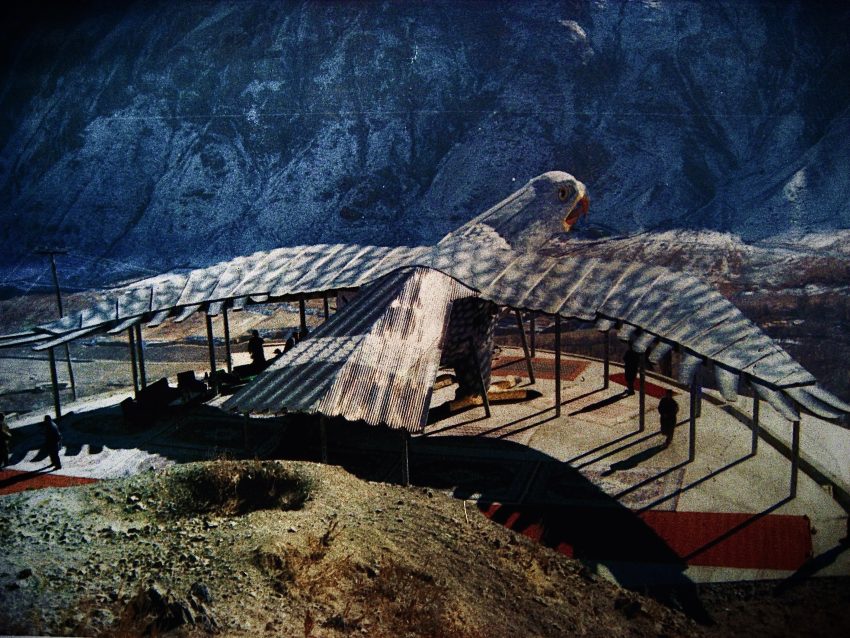
In the past two centuries, Kayan Valley has emerged as another significant center of Ismaili leadership in Khorasan, now known as Afghanistan. Some accounts refer to Kayan as the “Second Eagle’s Nest” in Ismaili history, following Alamut.

Kayan: The Second Eagle’s Nest

Kayan is a valley located 30 kilometers west of Doshi district in Baghlan Province. The valley is home to Sayyids and Hazaras, including a family of Sayyids of Hussaini lineage. This family, originally from Iraq, migrated to Iran and eventually settled in Afghanistan. Their ancestor, Abdal Sahib, was a respected figure, and his descendants have continued to command respect for their honesty, faith, and dedication to the community. The family’s integrity earned them admiration even from non-Ismailis.

Shah Abdul Hadi, the grandson of Abdal Sahib, lived in Kayan Valley during the reign of Amir Sher Ali Khan. He was encouraged by the Ismailis of the region and neighboring northern areas to visit Imam Hasan Ali Aga Khan I, the leader of the Ismaili community, to represent their concerns. At that time, the previous representative of the Imam in Afghanistan had been from India, and his unfamiliarity with Afghan customs and culture had posed challenges for the community. Funds were raised, and Shah Abdul Hadi traveled to Kerman, Iran, where he met with the Imam. Upon his return, he was appointed as the representative of the Ismailis in Afghanistan, guiding them with wisdom and compassion.

After Shah Abdul Hadi’s passing, his son, Sayed Hussain, a knowledgeable and reputable figure, succeeded him as the Imam’s representative. Sayed Hussain was highly regarded, and his reputation spread far and wide. He had seven sons, and after his death, his son, Sayed Jafar Khan, assumed the leadership. Sayed Jafar Khan was known for his exceptional knowledge and leadership skills, earning the respect of Amir Sher Ali Khan, with whom he maintained a close relationship. This relationship fostered strong ties between the Afghan ruler and Imam Hasan Ali Aga Khan.

Sayed Jafar Khan passed away in 1894, and his son, Sayed Gohar Khan, was appointed as the Imam’s representative by Aga Ali Shah, Aga Khan II. Sayed Gohar Khan served the Ismaili community in Afghanistan until his death in 1898. His son, Sayed Fraidoon Khan, succeeded him and continued to provide valuable leadership until his passing in 1909. The leadership then passed to Sayed Timur Shah Khan, who served the community with patience and skill until his death. The leadership transitioned to Sayed Nader Shah Khan, appointed by Sultan Muhammad Shah, Aga Khan III. Sayed Nader Shah Khan was a distinguished scholar and mystic of the 20th century, respected by people of various faiths in Afghanistan. His contributions to the Ismaili community were profound, including the authorship of 54 religious and mystical books. For his invaluable services, he was honored with high titles by the Imam until his passing in 1971.

Following his death, his eldest son, Sayed Shah Nasir, was appointed as the Imam’s representative. Sayed Shah Nasir devoted himself to serving the community until he was released from prison during Babrak Karmal’s regime. Upon his release, he, with the advice of his brother Sayed Mansur Naderi, left Afghanistan for England. He entrusted his brother with the leadership of the Afghan Ismailis.

The Leadership of Sayed Mansoor Naderi

Sayed Mansur Naderi’s tenure as the leader of the Ismaili community in Afghanistan is considered a golden era in their history. His unique leadership and foresight gave the marginalized Ismaili community a renewed national identity, making them significant players in Afghanistan’s political landscape. During the regimes of Babrak Karmal and Dr. Najibullah, Sayed Mansur Naderi played a pivotal role as a trusted mediator between the government and the Mujahideen. Kayan became renowned as a center for peace and major national discussions during this period.

As the civil war intensified, establishing a strong military and political base to defend the rights of the Ismailis became increasingly important. Recognizing this need, Sayed Mansur Naderi organized a military unit and obtained government authorization to form the 513th Tribal Regiment in the Doshi district. This regiment quickly expanded into a brigade and eventually into a corps, with the Ismaili military forces under the leadership of General Sayed Jafar Naderi, son of Sayed Mansur Naderi, operating across the northern provinces of Baghlan, Kunduz, Takhar, Badakhshan, Balkh, and Samangan. The Kayan Valley, as the center of Ismaili governance, once again played a pivotal role in their struggle, much like Alamut had centuries earlier. For the first time in Ismaili political history, Sayed Mansur Naderi was appointed Vice President of the Islamic State of Afghanistan.

Post-Taliban Era and the Ismaili Community’s Role (2001-2021)

Following the fall of the Taliban regime in 2001, the Ismailis of Afghanistan, under the leadership of Sayed Mansur Naderi, played a significant role in promoting democracy and rebuilding the country. Sayed Mansur Naderi emerged as a prominent political and national figure, with his influence so strong that President Hamid Karzai announced his second-term presidential agenda at a large Ismaili gathering in Kayan.

Over the 20 years of democracy (2001-2021), the Afghan Ismailis made notable contributions to politics, nation-building, reconstruction, and efforts to end the war and establish peace in Afghanistan.

The legacy of leadership and resilience in Kayan Valley continues to resonate in the history of the Ismailis, symbolizing the enduring spirit of the community and representing the second “Eagle’s Nest” in their storied history.

Note: Sayed Mansur is also spelled as Sayed Mansoor or Sayed Mansour in various sources.

Bring the Beauty of the Hindukosh into Your Home
Get a stunning framed canvas of the Hindukosh Mountain view from Kayan Valley – perfect for your wall.

Recent Posts

  • Ismaili Imamat Pledges €100 Million to Syria’s Recovery at European Commission ConferenceMarch 18, 2025
  • Aga Khan V Ascends as the 50th Hereditary Imam of Ismaili MuslimsFebruary 13, 2025
  • Hakim Nasir Khusraw: Poet, Philosopher, and Ismaili VisionaryOctober 11, 2024
  • How the Ismailis of Tajikistan Reconnected with the Imamat DivanAugust 5, 2024
  • Kayan Valley’s Healthcare Initiatives for the Ismailis of Badakhshan, AfghanistanAugust 2, 2024

©2024 Kayan Valley

  • Home
  • Privacy Policy
  • Terms of Use
  • Return & Refund Policy