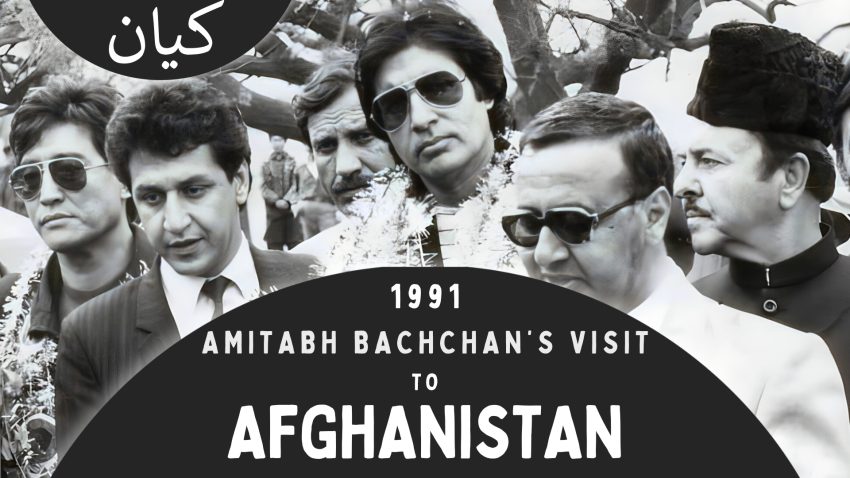
In the spring of 1991, a remarkable and unforgettable event took place in the heart of Afghanistan’s northern highlands. Kayan Valley, known for its natural beauty, cultural depth, and spiritual significance, proudly welcomed one of India’s most beloved film stars — Amitabh Bachchan — during the filming of the legendary Bollywood movie Khuda Gawah.
Amitabh Bachchan, accompanied by director Mukul S. Anand and a small team, traveled to Afghanistan to shoot key scenes of Khuda Gawah, a film that portrayed Afghan culture, honor, and traditional sports like Buzkashi. While much of the filming took place near Kabul and Mazar-e-Sharif, it was in Kayan Valley — the spiritual center of Afghanistan’s Ismaili community — where one of the most heartfelt moments of the journey unfolded.
Led by Sayed Mansur Naderi, the respected leader of the Afghan Ismailis, the people of Kayan Valley organized a grand and sincere welcome for the visiting Indian guests. Villagers gathered in large numbers, lining the roads and rooftops, expressing joy and admiration with claps, smiles, and chants of “Khush Amadeed” (Welcome). The warm reception highlighted the deep cultural connection Afghans have always had with Indian cinema and the values it shares — love, loyalty, courage, and family.
As a gesture of Afghan hospitality and high respect, Sayed Mansur Naderi presented Amitabh Bachchan with a beautiful Afghan horse — a symbol of honor in Afghan tradition. This moment remains etched in the memory of the local people and has been recalled by Bachchan himself in several interviews as one of the most extraordinary experiences of his life.
Despite the challenges of the time — with Afghanistan facing internal conflict and political uncertainty — the visit to Kayan Valley took place in an atmosphere of peace, protection, and genuine hospitality. It became a symbol of what is possible when culture, art, and goodwill come together.
More than thirty years later, the people of Kayan still remember that day with pride. The memory of Amitabh Bachchan riding through the valley, meeting elders and youth, and being honored as a guest of the community is not just part of Kayan’s history — it is a part of Afghanistan’s shared cultural journey with the region and beyond.
At Kayan Valley, we cherish this moment as a proud chapter in our story — a time when art brought people together and showed the world the true spirit of Afghan hospitality.